

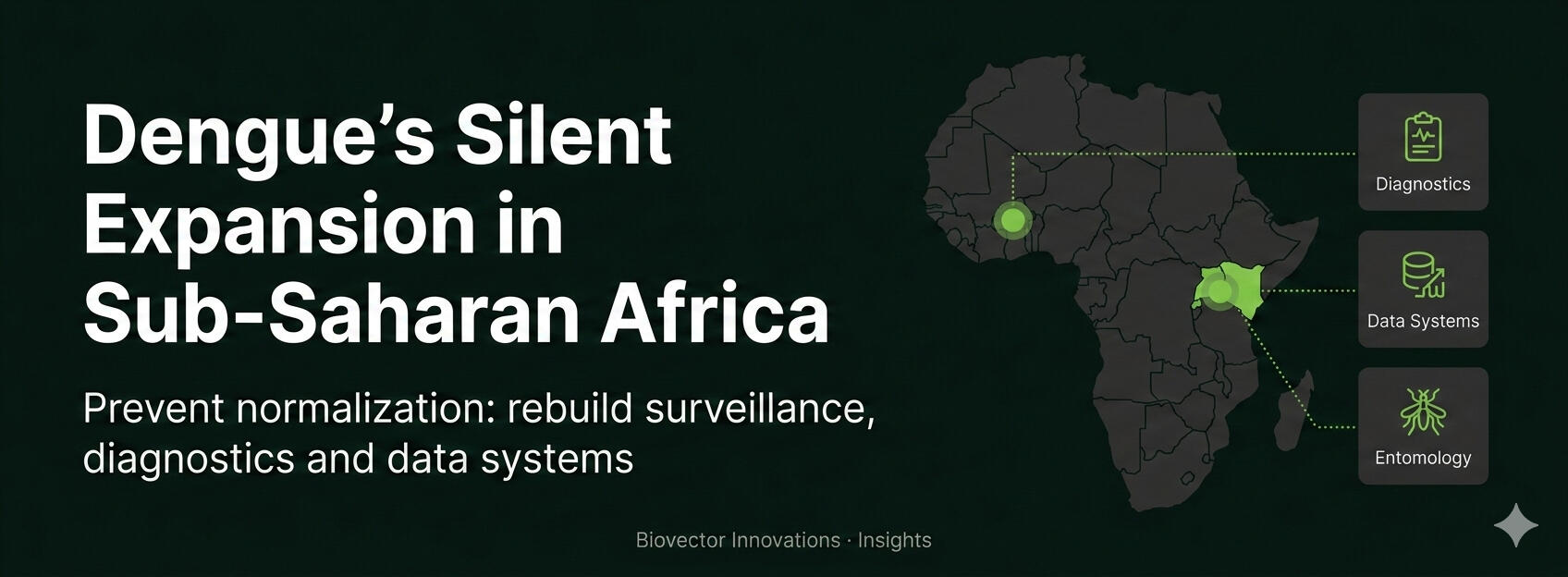
Dengue's Silent Expansion in Sub-Saharan Africa: Closing the Diagnostic and Surveillance Gap Before It Normalizes
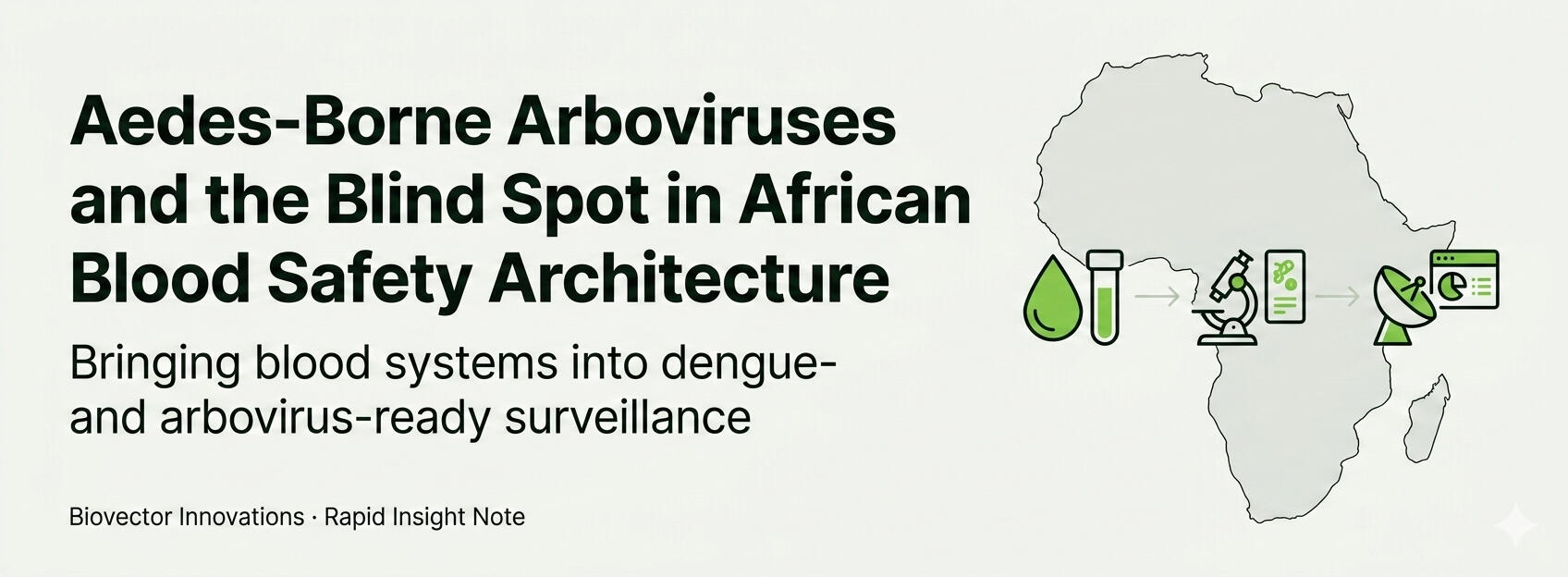
Dengue’s rise in SSA is driven by structural misalignment: diagnostics, data, and funding are implemented as disconnected projects, not integrated infrastructure.
Biovector Innovations • • Pillar: Vector-borne disease surveillance and diagnostics architecture

Key surveillance & diagnostics indicators (targets, illustrative).
Abstract
Dengue is no longer a rare or imported event in Sub-Saharan Africa. Recent data from the WHO African Region show hundreds of thousands of suspected cases and hundreds of deaths across multiple countries, with single-country outbreaks driving the majority of the burden.[1][2] Yet most national surveillance systems still treat dengue as a marginal threat, and laboratory networks are not configured to detect or track it at scale.
This brief argues that the region is structurally under-prepared for dengue's trajectory. The core problem is not just a lack of rapid diagnostic tests; it is the absence of an integrated architecture that ties together clinical suspicion, tiered laboratory confirmation, entomological surveillance, and cross-border information flows. The piece outlines priority investments for funders and policymakers to close this gap over the next 3 to 5 years, before dengue outbreaks become a normalized and unremarkable seasonal reality.
1. Dengue is no longer an outlier event in the African Region
For years, dengue in Africa was framed as sporadic, under-detected, and largely secondary to malaria. That framing is now untenable.
The WHO African Region reported roughly 172,000 suspected dengue cases in 2023, including more than 70,000 confirmed and probable cases and over 700 deaths across 15 countries.[1] Burkina Faso alone accounted for the majority of these numbers, around 85% of reported cases and more than 90% of deaths, highlighting how quickly a single national outbreak can dominate the regional profile.[1][2]
Three structural features of this trend are important for system design:
- The burden is likely still underestimated. Multiple studies and WHO assessments point to limited availability of confirmatory diagnostics, inconsistent case definitions in practice, and low clinical suspicion in malaria-endemic settings where febrile illness is routinely attributed to malaria.[3][4]
- Transmission is expanding beyond historically recognized hotspots. Evidence of outbreaks in Sahelian and coastal West African countries, alongside case reports in East Africa, suggests that Aedes-borne transmission is likely far more widespread than routine reporting indicates.[1][2]
- Climate and urbanization trends are moving in dengue's favor. Rapid urban growth, inadequate water and waste management, and climate-driven changes in rainfall and temperature patterns are cumulatively expanding suitable habitat for Aedes vectors.
If African systems continue to treat dengue as a marginal or imported concern, surveillance and diagnostics architectures will be persistently misaligned with actual and emerging risk.

Sample sentinel network: urban sentinel sites and regional surge hubs (Burkina Faso, Tanzania examples).
2. Why current diagnostics and surveillance are structurally misaligned
Most African countries do not have dengue-specific surveillance programs. Instead, dengue is often folded into generic febrile illness or other arboviral categories.

Integrated dengue surveillance: clinics feed labs and entomology; regional platform aggregates for surge support.
2.1 Fragmented and shallow diagnostic capacity
A recent assessment of epidemic-prone disease testing capacity in African public health laboratories highlighted cross-cutting issues: limited availability of appropriate diagnostic technologies, challenges in establishing and maintaining testing capacity, and gaps in quality systems.[4] Dengue is a clear casualty of these constraints.
Common failure modes include:
- Narrow and fragile access to tests. Rapid diagnostic tests and ELISA-based assays for dengue are often only available in a small number of national or reference laboratories, with limited or no access at regional or district levels.
- Over-reliance on ad hoc external support. During outbreaks, reagents and RDTs may be mobilized through partner support or emergency shipments, but this does not translate into sustained capacity.[3]
- Weak integration into routine algorithms. Clinical pathways for non-malarial febrile illness rarely include dengue testing as a structured step, leading to missed cases and biased surveillance data.
2.2 Limited entomological and environmental intelligence
Dengue surveillance cannot rely on human cases alone. Yet entomological surveillance, tracking Aedes populations, breeding sites, and insecticide resistance, is chronically under-resourced. WHO reports for the African Region note shortages of trained entomologists and vector control specialists, as well as limited capacity to design and execute systematic surveillance.[3]
Without a minimal entomological backbone, countries are effectively blind to changing Aedes ecology until outbreaks are already underway.
2.3 Siloed information systems and weak cross-border visibility
Even where diagnostics and entomological data exist, they are rarely integrated. Routine surveillance systems may capture suspected cases, while lab information systems and entomology teams maintain separate datasets. Regional visibility is similarly fragmented; cross-border data sharing is often slow, informal, or dependent on partner-mediated channels.
The result is an architecture that cannot answer basic strategic questions in real time:
- Where is dengue transmission intensifying right now?
- Which geographies are seeing early signals of Aedes expansion?
- Which facilities are persistently under-testing or under-reporting?
3. What a fit-for-purpose dengue surveillance architecture would look like
Closing the gap does not require building entirely new systems from scratch. Countries can layer dengue-specific capabilities onto existing Integrated Disease Surveillance and Response (IDSR) and laboratory networks.
A fit-for-purpose architecture in Sub-Saharan Africa would include at least four linked components:

Tiered diagnostics network: peripheral RDTs → regional ELISA/PCR → national reference confirmation.
3.1 Tiered diagnostic networks with clear testing roles
- Peripheral level (primary care and district hospitals): Capacity to recognize dengue-compatible syndromes and use RDTs in defined scenarios, such as non-malarial febrile illness with specific clinical or epidemiological risk factors.
- Intermediate or regional laboratories: Ability to perform ELISA-based serology and, where feasible, PCR confirmation for a subset of cases, including severe disease and atypical presentations.
- National reference laboratories: Capacity to confirm outbreaks, support quality assurance, perform more advanced testing (e.g., serotyping, sequencing through regional collaborations), and coordinate reagent supply planning.
Funders should not just pay for test kits. They should invest in stable reagent pipelines, quality management, and data integration across tiers.
3.2 Minimal but continuous entomological surveillance
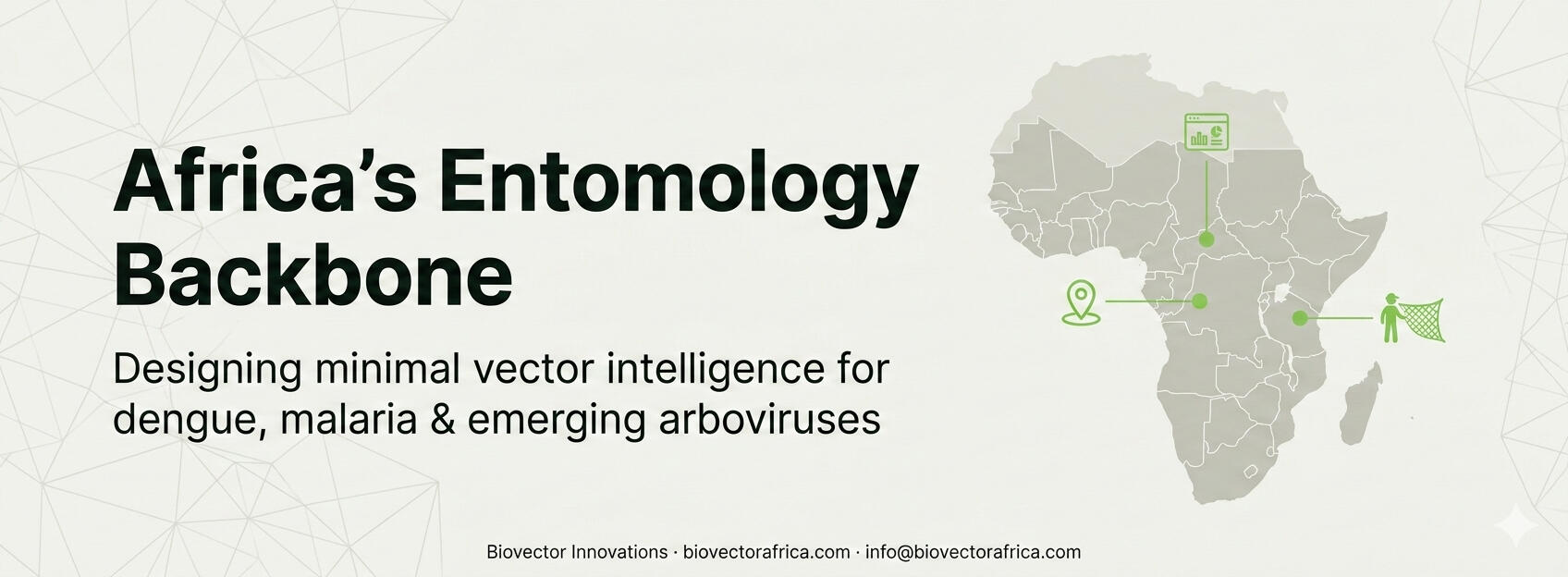
Countries do not need exhaustive vector mapping everywhere. A minimal viable backbone can include:
- Sentinel sites in high-density urban and peri-urban areas to track Aedes indices and insecticide resistance trends.
- Periodic, standardized surveys around outbreak-affected districts to understand local drivers and inform vector control strategies.
- Regional technical support to design protocols and analyze data, leveraging limited entomology expertise more efficiently.
WHO and partners have already deployed entomologists to priority countries to strengthen surveillance; the challenge is making this support routine, not exceptional.[3]
3.3 Integrated risk assessment frameworks
Work in countries such as Tanzania shows that structured dengue rapid risk assessment approaches are feasible even when diagnostic capacity and exposure data are incomplete.[5] These frameworks combine syndromic and laboratory data (where available), entomological and environmental indicators, and contextual information on health system capacity.
Institutionalizing these tools inside ministries and national institutes, rather than keeping them as one-off partner exercises, would materially improve how countries prioritize surveillance and response resources.
3.4 Regional platforms for data sharing and surge support
Given the speed with which dengue can move across borders, no country's architecture is sufficient in isolation. Practical regional priorities include:
- Agreed regional minimum reporting standards for dengue indicators.
- Mechanisms for rapid deployment of technical teams (epidemiology, entomology, laboratory) across borders during surges.
- Shared procurement and stockpiling strategies for diagnostics and key supplies, building on existing hubs in East and West Africa.[3]
4. Implications for funders and policymakers in 2026
For funders and policymakers in 2026, the question is not whether dengue is important enough to merit attention. The data already answer that. The question is whether systems will normalize repeat outbreaks as the new normal, or whether this window is used to re-architect surveillance and diagnostics.
If these architectural moves are made in the next 3 to 5 years, the region can avoid a future in which dengue becomes another entrenched, under-measured burden on overstretched health systems.

One-page funder brief summarizing recommendations and illustrative funding scales.
Implementation recommendations
- Reclassify dengue as a routine, not exceptional, surveillance target. Integrate dengue into IDSR indicator sets, case definitions, and analytic products, with explicit attention to non-malarial febrile illness.
- Finance tiered diagnostic capacity with predictable operating budgets. Move beyond project-based kit donations toward multi-year financing for reagents, equipment maintenance, and training across network tiers.
- Underwrite entomological backbone functions. Fund a small but continuous entomological surveillance program rather than sporadic campaigns, and connect outputs directly to national decision-making.
- Invest in integrated data systems and analytics. Link laboratory information systems, routine surveillance, and entomology datasets into shared analytic pipelines and dashboards that answer dengue-specific questions.
- Tie dengue architecture to broader biosecurity and climate resilience agendas. Position investments as dual-benefit capacities that also strengthen preparedness for other arboviruses and climate-sensitive vector-borne diseases.
References
- WHO Regional Office for Africa. Dengue in the WHO African Region: Situation Report 01 (19 December 2023). Available from: https://www.afro.who.int/fr/node/18709. [1]
- World Health Organization. Disease Outbreak News: Dengue - Global situation (30 May 2024). Available from: https://www.who.int/emergencies/disease-outbreak-news/item/2024-DON518. [2]
- WHO Regional Office for Africa. Report of the Regional Director: The work of WHO in the African Region, July 2023 to June 2024. Available from: https://www.afro.who.int/publications/report-regional-director-work-world-health-organization-african-region-july-2023-june. [3]
- Ashenafi A, et al. Diagnostics for detection and surveillance of priority epidemic-prone diseases in Africa: an assessment of testing capacity and laboratory strengthening needs. Available from: https://pubmed.ncbi.nlm.nih.gov/39360262/. [4]
- Belau MH, et al. Integrated rapid risk assessment for dengue fever in settings with limited diagnostic capacity and uncertain exposure: Development of a methodological framework for Tanzania. Available from: https://pubmed.ncbi.nlm.nih.gov/40153405/. [5]
- World Health Organization. Global strategic preparedness, readiness and response plan for dengue and other Aedes-borne arboviruses (September 2024 to September 2025). Available from: https://www.who.int/publications/m/item/global-strategic-preparedness--readiness-and-response-plan-for-dengue-and-other-aedes-borne-arboviruses. [6]